Robinhood Chain Is Getting Attention. Is Your Token Launch Ready?
Robinhood Chain is no longer just a roadmap item. Its public mainnet went live on July 1, 2026, and activity arrived quickly. Less than two weeks later, CoinDesk cited Bernstein data showing about USD 3.1 billion in DEX volume over seven days.
There is an important second half to that headline: much of the early activity was memecoin-driven. Attention can arrive fast, but that does not automatically create durable demand for a new token. Before launching, a team still needs a clear reason for the token, a distribution plan, a liquidity plan, and someone responsible for what happens after day one.
Important: A standard ERC-20 token created on Robinhood Chain is not automatically endorsed by Robinhood, is not a Robinhood Stock Token, and is not guaranteed to be listed in the Robinhood app, wallet, or any other trading platform.

01 Why Robinhood Chain Is Getting Attention
Robinhood describes the network as an Ethereum Layer 2 built with the Arbitrum platform and designed around financial services, DeFi, and tokenized real-world assets. That positioning gives builders a new network to explore, while the early trading numbers give the launch a timely story.
If you are seeing “Robinhood meme” posts around that activity, check what the writer actually means. The phrase is loose: it may refer to Robinhood as a brand, meme stocks on the brokerage, or memecoins trading on Robinhood Chain. Those are different stories. Here, the relevant signal is early memecoin activity on the new chain, not a Robinhood-backed token.
Still, a busy first week is a signal of attention, not proof that every project belongs there. The useful question is not simply, “Can we create a token?” It is, “Will users understand why this token exists once the initial excitement settles?”
For a serious launch, the answer should fit in one sentence. If the token's purpose, audience, or role in the product is still vague, more launch activity will not fix the underlying problem.
02 A Quick Token-Launch Readiness Check
This is the short version to review with the team before anyone opens a token creator:
- Purpose: What can a holder actually do with the token, and who is it for?
- Supply: Are total supply, decimals, allocations, and any future token authority decisions documented and approved?
- Distribution: Which wallets receive tokens, why do they receive them, and who checks the final list?
- Liquidity: Who provides the initial assets, controls the LP position, and approves later changes?
- Operations: Who monitors the contract, privileged wallets, holder questions, and incidents after launch?
- Communication: Can the team explain the risks without implying Robinhood endorsement, stock-token status, or guaranteed listing?
This is deliberately not a button-by-button tutorial. Network settings, live fields, fees, and product steps can change, so the current instructions belong in SlerfTools Docs.
03 What to Verify After Going Live
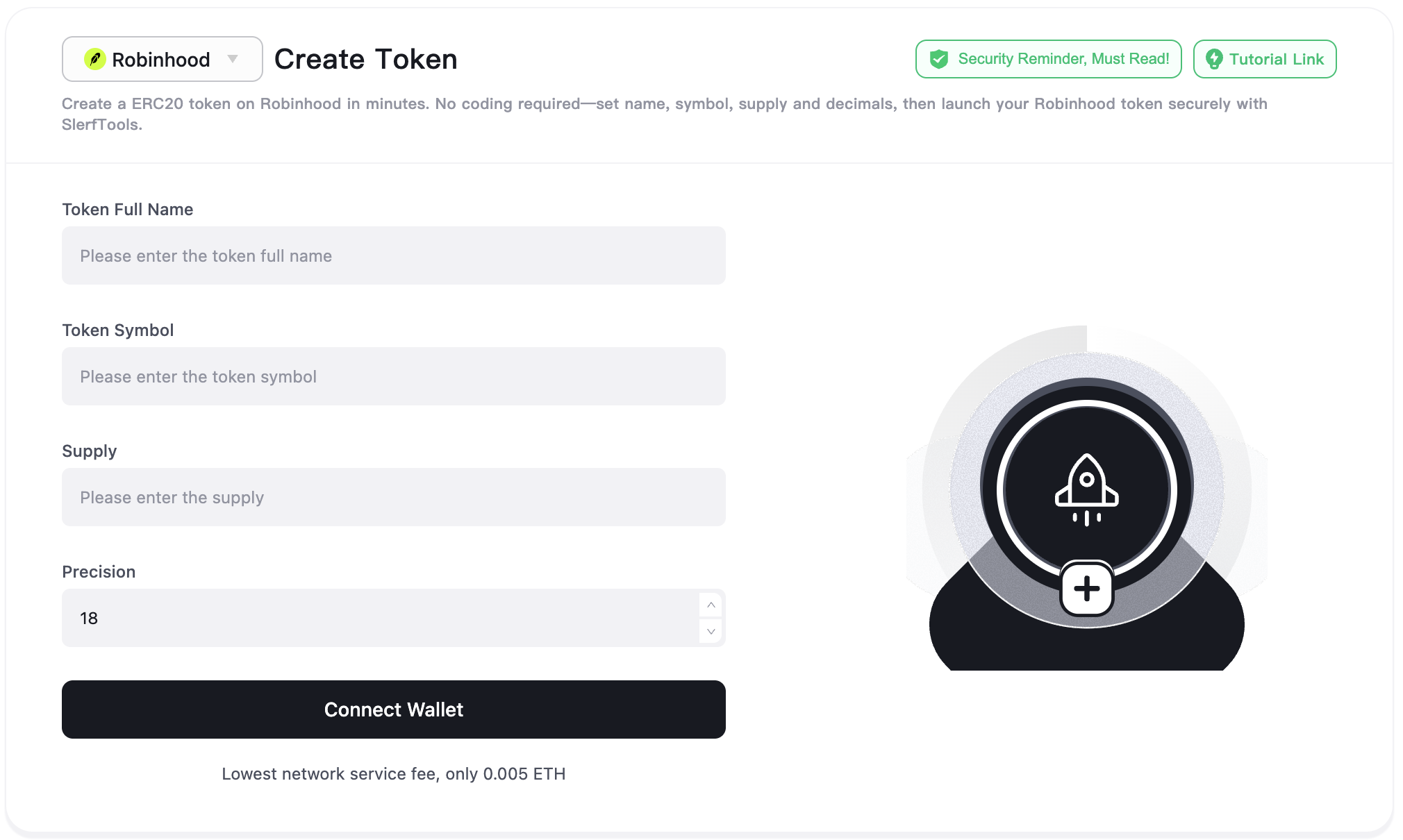
A success message is useful, but the on-chain record is the source of truth. Check the contract address and creation transaction in Robinhood Chain Blockscout. Review the token name, symbol, supply, initial recipient, and any permission information the explorer makes available.
Then make one verified contract address easy for users to find. A copied address from an old message or an unofficial channel can create confusion even when the contract itself is correct.
The work also continues after verification. Watch holder distribution, liquidity changes, privileged wallets, and user reports. Decide in advance who can pause an operational workflow, who communicates an incident, and where transaction records are stored. Launch day is a checkpoint, not the finish line.
04 Ready to Execute?
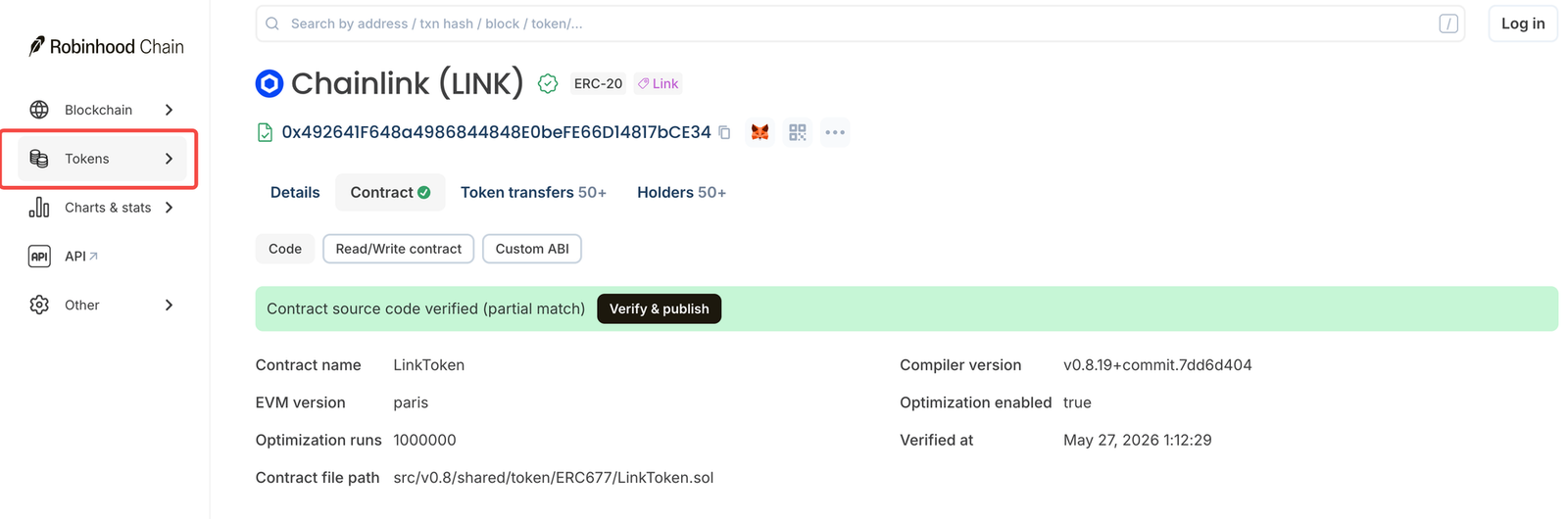
Once the launch decisions are settled, open the SlerfTools Robinhood Chain Token Creator. For the current network configuration and exact product flow, use the Robinhood Chain setup guide and the step-by-step token creation guide.
Start with a small test, review every wallet confirmation, and keep the contract address and transaction hash with the project records. SlerfTools helps with execution; the project team remains responsible for token design, wallet security, communications, and every on-chain approval.
This article is for general information and does not provide investment, legal, or financial advice.
About SlerfTools
SlerfTools is a multi-chain Web3 toolkit supporting Solana, BNB Chain (BSC), Base, Ethereum, Robinhood Chain, and other supported EVM-compatible networks. It provides tools for common on-chain workflows, including token management, liquidity management, wallet operations, batch transfers, and batch transaction execution. SlerfTools is designed to help teams work more efficiently while retaining control of wallet access and transaction approvals.