Which Crypto Tokens Could React to the SEC's Tokenized Stock Exemption?
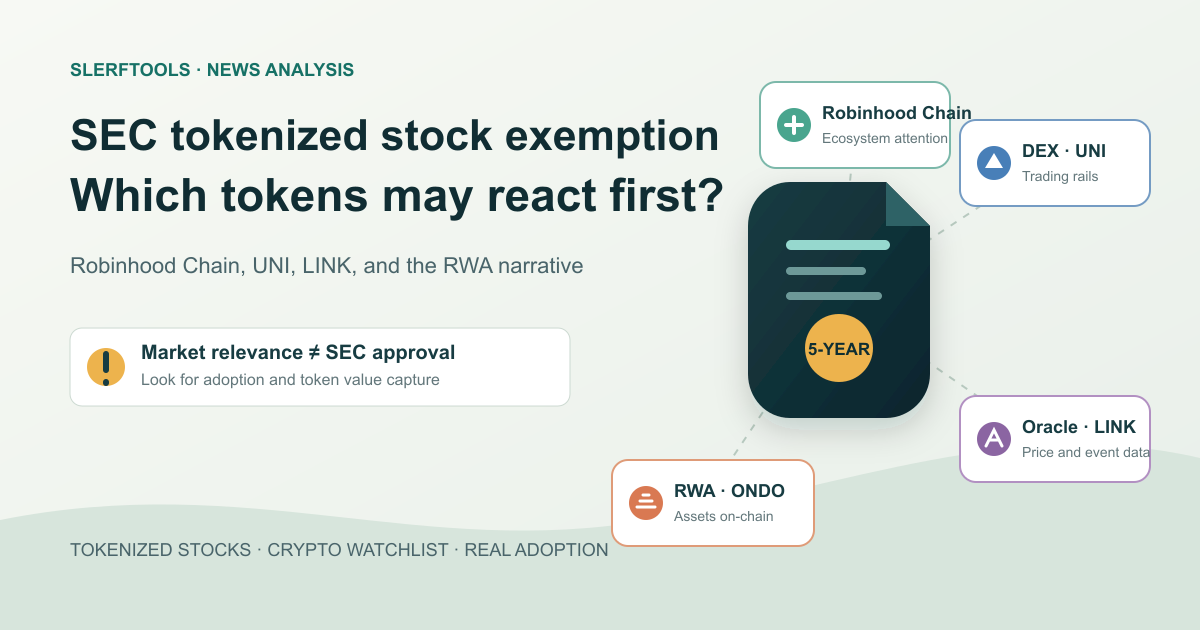
You may have seen the headline: “The SEC is opening the door to stocks on-chain.” What retail traders really want to know is whether the news could affect Robinhood Chain, UNI, LINK, ONDO, or other altcoins.
The short answer: the Order directly covers qualifying tokenized stocks and venues, not those tokens. But it may bring fresh attention to on-chain trading, DEXs, oracles, and RWA infrastructure, creating narrative-driven moves before any business impact appears.
The SEC Innovation Exemption, issued on September 17, 2026, creates a five-year test lane for qualifying venues to try secondary trading in defined tokenized NMS stocks.
The simple version: “Connected to the narrative” does not mean “approved by the SEC,” and it does not guarantee a price increase.
What did the SEC actually open up?
According to the SEC announcement, qualifying venues may test certain tokenized-stock trades in a controlled environment.
The key words are controlled and secondary trading. This is not a free pass to issue stock tokens or let every wallet trade them. The temporary window runs from September 17, 2026 through September 17, 2031.
Which tokens could trade on the narrative?
Robinhood Chain and its ecosystem
Because Robinhood is closely associated with stock trading, any “stocks on-chain” headline can pull attention toward Robinhood Chain. But the Order does not authorize Robinhood Chain or approve ordinary tokens deployed there.
A chain, projects built on it, and a tradable token are also different things. If the chain has no native tradable token, interest in the network should not be translated into a made-up “Robinhood Chain coin.” Watch for actual tokenized-stock, wallet, venue, or infrastructure launches in the ecosystem.
For a closer look at ordinary token and tooling workflows on the network, read Robinhood Chain Is Getting Attention. Is Your Token Launch Ready?.
UNI and other DEX tokens
The framework allows qualifying venues to test certain AMM and liquidity-pool structures. That can place UNI and other DEX tokens inside the market's “on-chain stock infrastructure” narrative.
It does not make Uniswap an approved stock venue or give UNI new rights. The stronger signal would be a compliant venue actually adopting related infrastructure and producing usage, fees, or protocol integrations.
LINK and oracle tokens
Tokenized stocks need dependable price, trading-halt, and corporate-action data. That may lead traders to view LINK and other oracle tokens as possible infrastructure beneficiaries. The SEC documents do not name Chainlink or LINK, so real benefit would require actual integrations and paid usage.
ONDO and other RWA tokens
ONDO and other RWA tokens sit closer to the broader “traditional assets on-chain” story and may react faster to the headline. But tokenized Treasuries, tokenized stocks, and governance tokens are different assets. The exemption does not automatically cover ONDO or another RWA token.
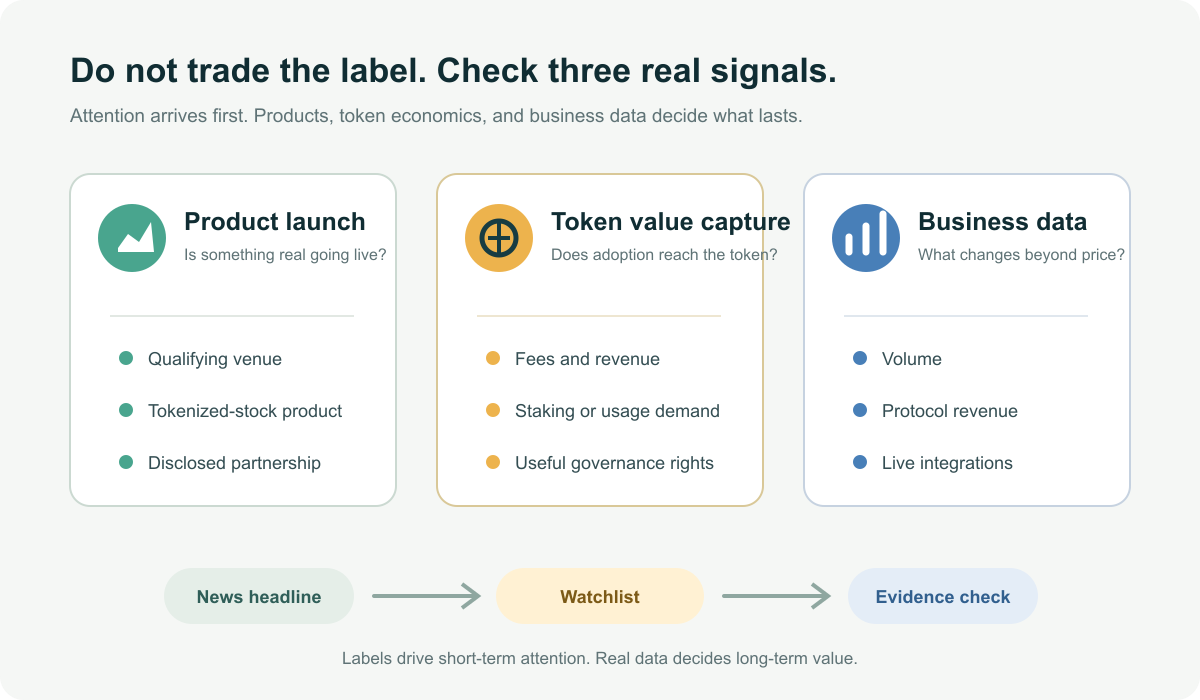
What should retail traders actually watch?
Before treating an altcoin as a beneficiary, look for three signals:
- A real product launch: a qualifying venue, tokenized stock, or disclosed partnership, rather than social-media speculation.
- Value capture for the token: whether usage creates fees, staking demand, or governance value for the token itself.
- Business data, not just price action: volume, revenue, and integrations matter more than a temporary narrative spike.
Robinhood Chain ecosystem projects, UNI, LINK, and ONDO can belong on a watchlist, but none should be described as directly approved or covered by this Order.
Where does SlerfTools fit?
SlerfTools is built for common multi-chain Web3 workflows, including token management, liquidity management, wallet operations, batch transfers, and batch transaction execution.
If this narrative leads you to explore a supported chain or an ordinary project token, you can open the SlerfTools toolkit for common token, wallet, liquidity, and batch workflows. If an asset represents stock or other securities rights, confirm its issuance and trading path first; SlerfTools is not an issuer, broker, custodian, or securities venue.
Conclusion: understand the asset before the tool
The SEC Innovation Exemption may affect market narratives before it affects real crypto businesses. Robinhood Chain ecosystems, UNI, LINK, and ONDO may attract attention, but durable value depends on product adoption and whether the token captures that activity.
Do not confuse “related to the theme” with “approved by the SEC,” and do not turn a regulatory test into a guaranteed price thesis.
This article is for news and industry information only. It is not legal, securities, investment, or compliance advice.
About SlerfTools
SlerfTools is a multi-chain Web3 toolkit supporting Solana, BNB Chain (BSC), Base, Ethereum, Robinhood Chain, and other supported EVM-compatible networks. It provides tools for common on-chain workflows, including token management, liquidity management, wallet operations, batch transfers, and batch transaction execution. SlerfTools is designed to help teams work more efficiently while retaining control of wallet access and transaction approvals.