How to Read Token Distribution Beyond the Allocation Chart
A large community allocation does not prove tokens are widely held. Learn how unlock schedules, wallet concentration and on-chain snapshots help assess token distribution risk.
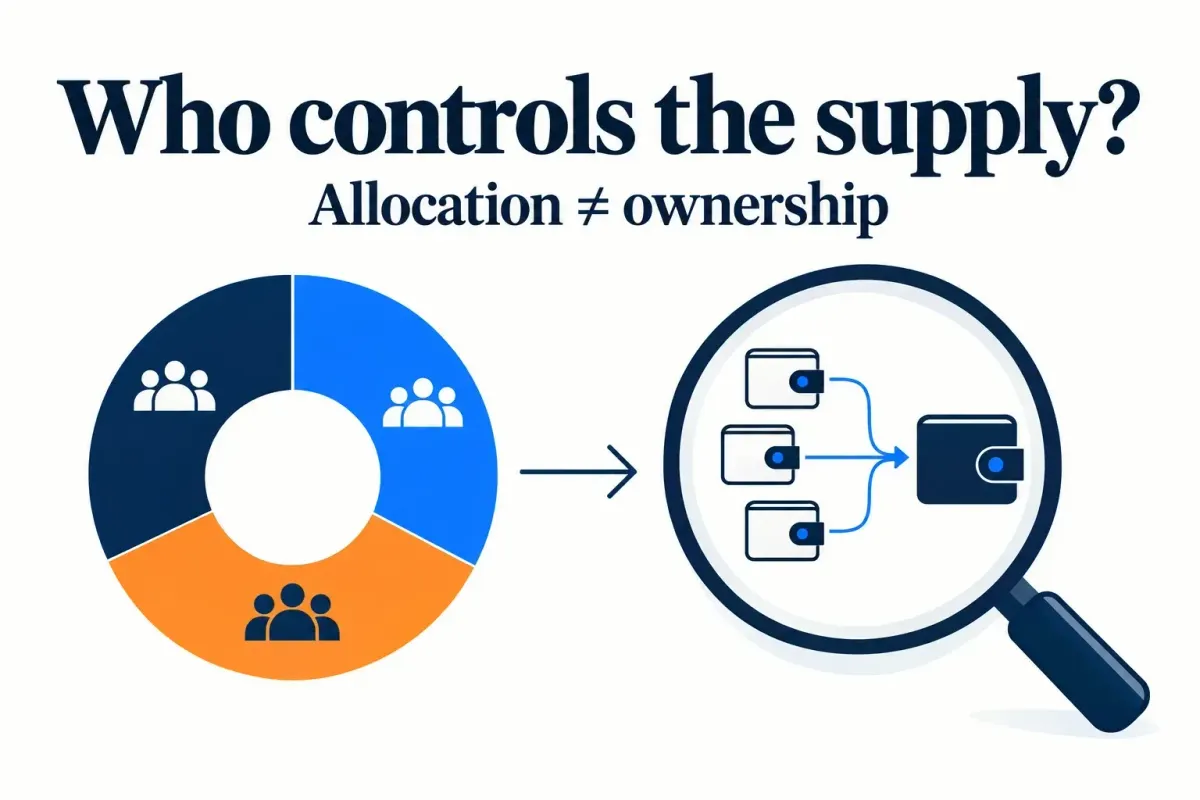
A project can allocate most of its tokens to the community without putting most of those tokens into users’ wallets on day one. To assess holder risk, read token distribution as three separate things: the allocation plan, the release schedule, and the holdings you can verify on-chain.
The distinction matters when you want to know who can sell, how much supply may become transferable next, and whether a “widely distributed” token is actually controlled by many independent holders.
Community allocation is not the same as an immediate distribution
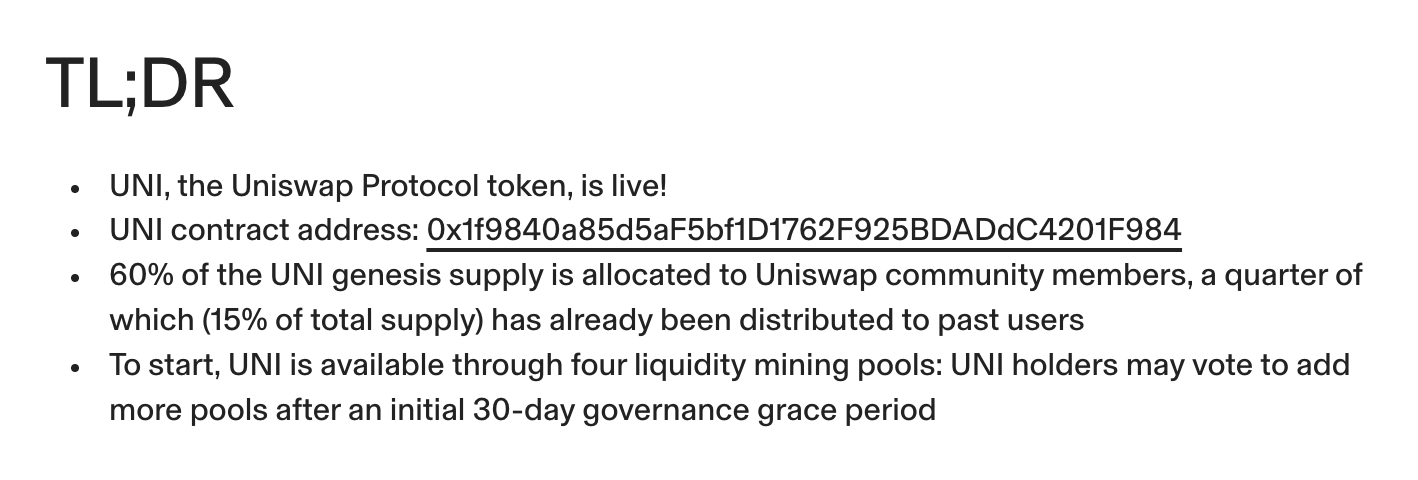
Uniswap’s original UNI announcement, published on September 16, 2020, provides a useful example. It allocated 60% of the initial supply to community members, while 15% of the total supply was immediately claimable by eligible historical users, liquidity providers and SOCKS participants. Team and investor allocations had four-year vesting arrangements.
Those percentages describe different things. The 60% was an allocation category, not a statement that 60% had already reached independent holders. The 15% was claimable supply, not proof that every eligible recipient had claimed or sold it. These are historical launch terms, not UNI’s current distribution.
When another project advertises a large community share, look for the same distinction: how much is already distributed, how much remains in a treasury or distribution contract, and who controls its release.
Check when the tokens can move
An allocation chart groups recipients. A vesting schedule tells you when restrictions expire. Neither proves what recipients will do after an unlock.
Start with four questions:
- Who receives the release? Team members, investors, a treasury and airdrop recipients may have different incentives.
- How is it released? A single cliff and a gradual release create different supply timelines.
- How large is it relative to the existing float? Record the circulating-supply source and methodology; an unlocked treasury balance need not be counted as circulating by every data provider.
- What enforces the restriction? Check the contract, recipient addresses and any ability to change the schedule, rather than relying only on a graphic.
An unlock is potential sellable supply, not a forecast of a sell-off. A transfer to an exchange is also not proof that a sale has occurred. Both are events to investigate alongside demand and available liquidity.
Read the holder list before treating concentration as a verdict
The largest addresses can include exchange wallets, liquidity pools, vesting contracts and project treasuries. Combining them into one “top holders” percentage can obscure who actually controls the tokens.
The reverse problem also exists: one owner can split a balance across many addresses. A rising wallet count therefore does not establish a rising number of independent holders.
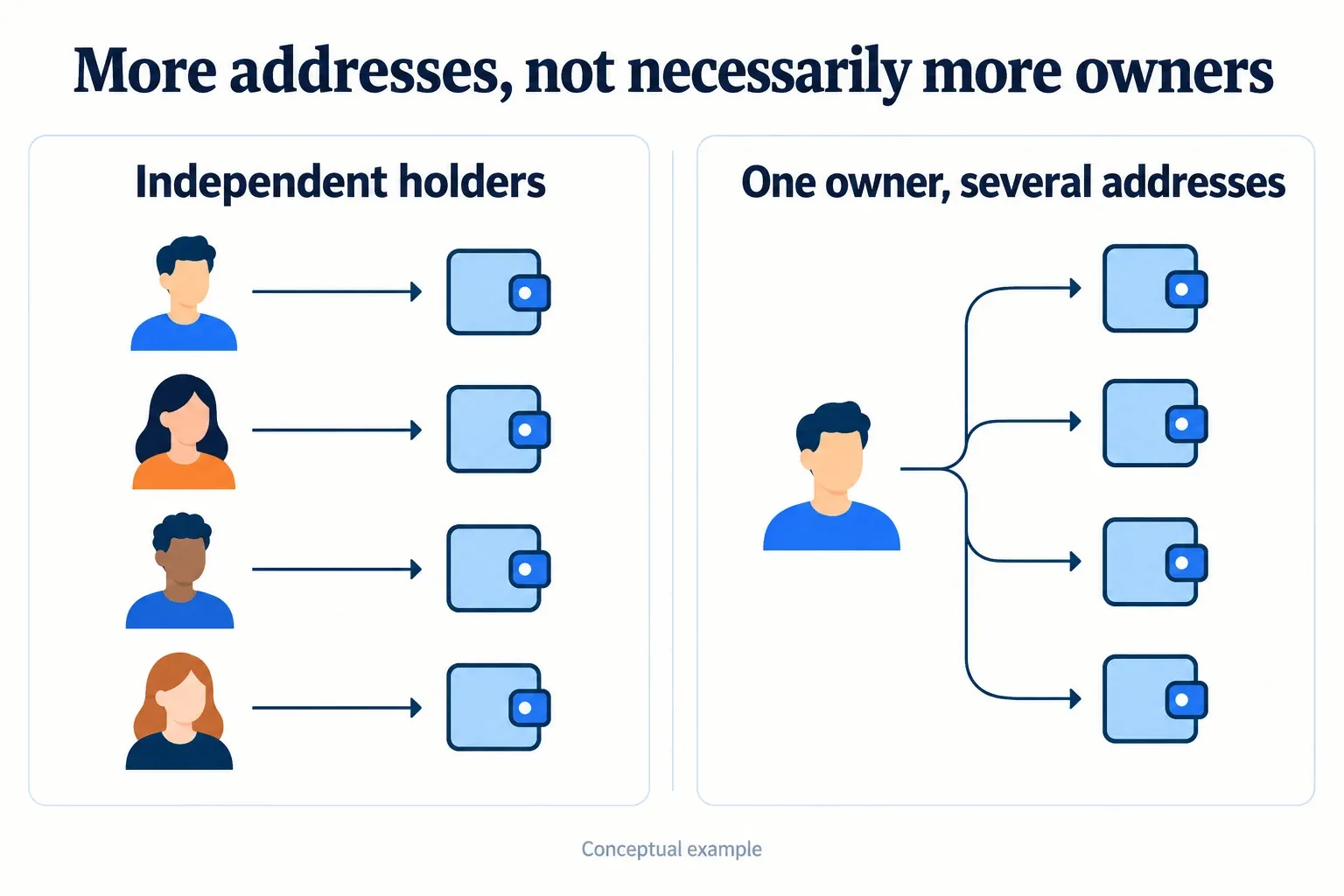
Conceptual example, not a finding about a real token or wallet owner.
Label known addresses first. Keep unidentified wallets as unknown. Shared funding or similar transfer patterns can suggest a connection, but a common exchange withdrawal source or distribution contract can also explain it.
Use a snapshot to compare the plan with actual holdings
For a Solana token, a holder snapshot provides a practical starting point. SlerfTools Token Snapshot supports sorting by holding quantity, balance-based filters and exports. Its documentation describes CSV, Excel, TXT and JSON output.
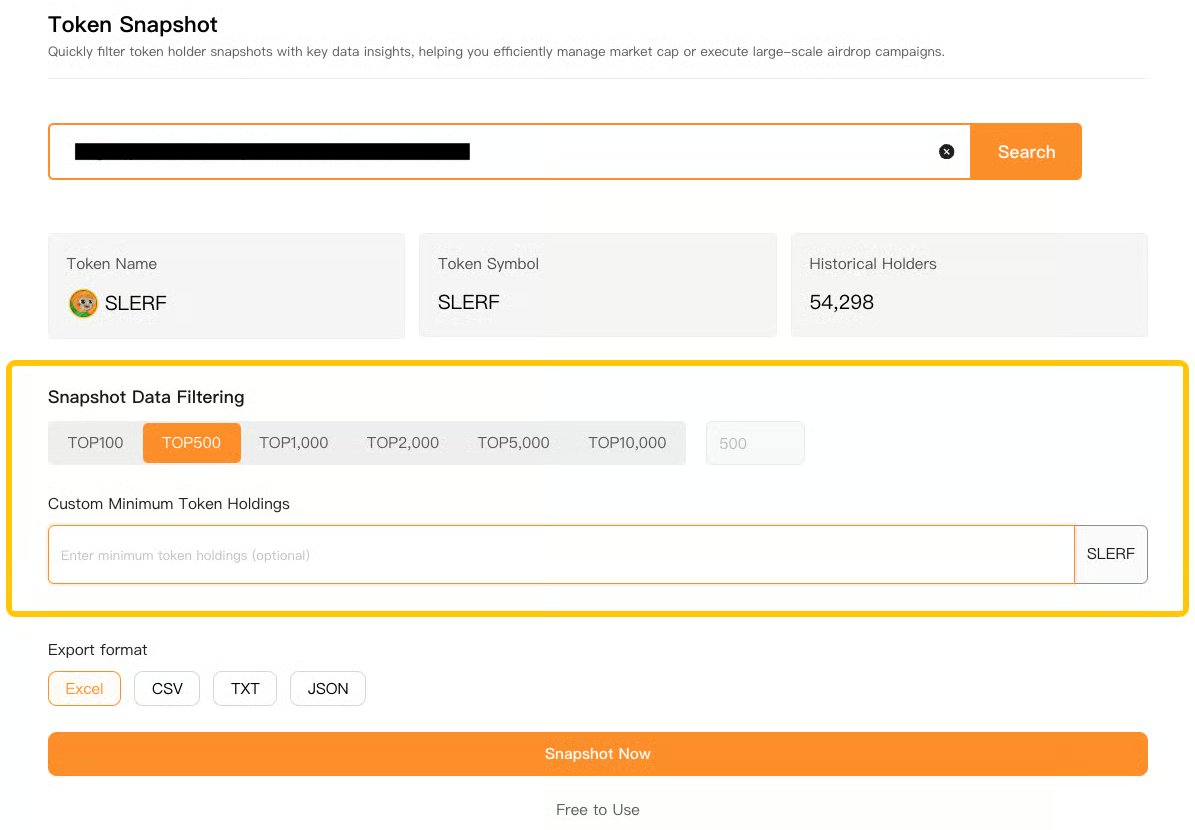
Documentation example of holder sorting and filtering; balances shown are not live data. Source: SlerfTools Docs. Captured October 16, 2026.
That is useful here because you can put the published allocation beside an address-and-balance list, annotate known treasury or vesting addresses, and record what remains unexplained. Keep an unfiltered baseline when assessing concentration: a filtered or truncated export can distort the picture if you treat it as the whole holder population.
A snapshot does not identify beneficial owners, validate a lock or prove that an unlock was sold. Comparing snapshots taken at different times shows balance changes; transaction history and verified labels are still needed to explain them.
What a useful distribution review should leave you with
Instead of a verdict based on one percentage, keep a short record:
| Question | Evidence to keep |
|---|---|
| Who is allocated the tokens? | Official allocation announcement and date |
| Which tokens can move next? | Release amount, recipients, schedule and enforceable restrictions |
| Where are the holdings now? | Snapshot date, balances, address labels and unknowns |
| What could change the picture? | Minting powers, treasury decisions or amendable restrictions |
The point is to replace “the community gets most of it” with a more useful assessment: which balances are already transferable, which will be released later, and which claims remain unverified. No allocation ratio alone answers whether the next wave of supply will find buyers.
About SlerfTools
SlerfTools is a multi-chain Web3 toolkit supporting Solana, BNB Chain (BSC), Base, Ethereum, Robinhood Chain, and other supported EVM-compatible networks. It provides tools for common on-chain workflows, including token management, liquidity management, wallet operations, batch transfers, and batch transaction execution. SlerfTools is designed to help teams work more efficiently while retaining control of wallet access and transaction approvals.